Magnus Niell's Tiny Triumph
Houghton-Butcher's Ticka camera
It had always been the dream of Swedish Engineer Magnus Niéll, to design a practical camera smaller than any previous design. Niéll is famous for producing several highly successful designs for miniature cameras such as the "Ensignette" and later the "Midget". His first success however came when he patented a design for a pocket watch camera later to become known as the ‘Ticka’.
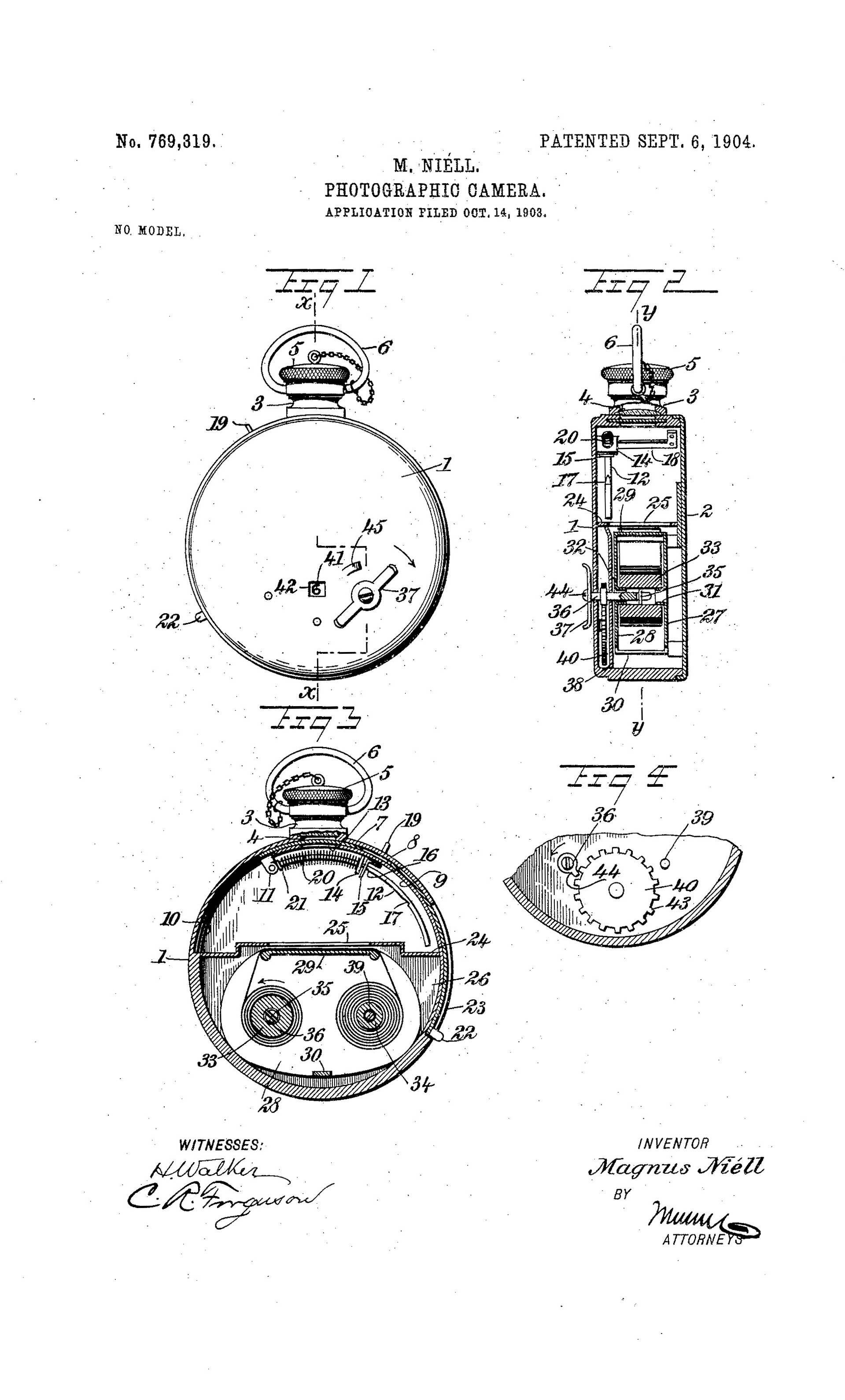
At the turn of the century disguised cameras were very popular. Pocket watch cameras had already been around for some years. The Photoret made by the Magic Introduction Company of New York had been introduced around 1894 and James Lancaster & Sons of Birmingham introduced a folding Watch camera in 1886. This camera had a complicated construction and cost £1 11s 6d. The Ticka was intended to cater for this market, but Niéll intended to use mass production techniques to make it a more affordable product.
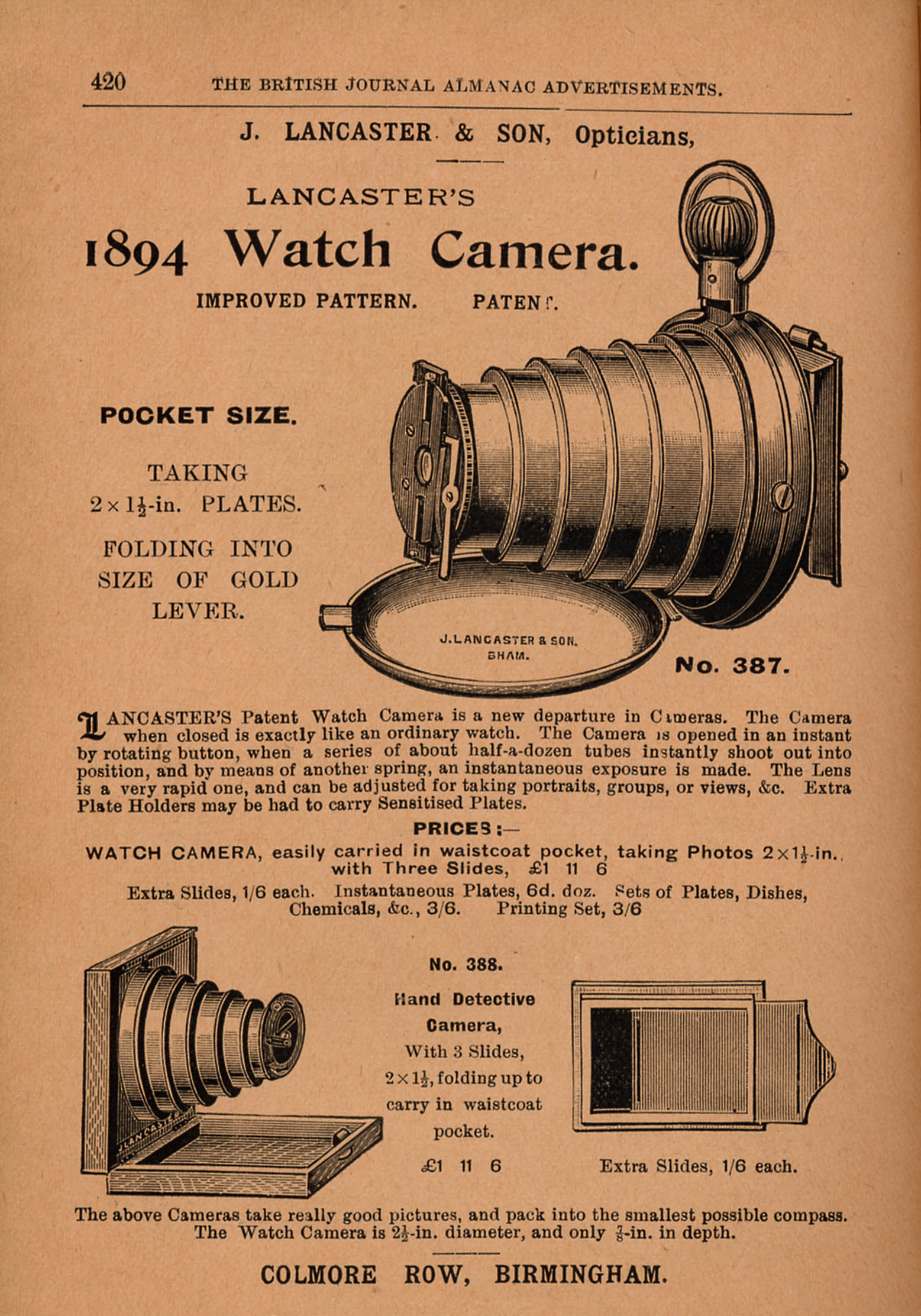
Niéll was not only a clever designer he was also a shrewd businessman. He first applied to patent his design in October of 1903 in the U.S. licensing the manufacture of the camera to the "Expo" Camera Co. of New York. They took manufacturing rights for America and sold the camera under the name "Expo". In October of 1904 Niéll applied for a British patented and when that was granted he approached Houghtons Ltd. They took it up and began selling the camera in 1906 as the 'Ticka'. It was also around this time that Ueda Shashinki Ten (Ueda Photographic Shop) in Japan began selling a version of the camera, which they called the "Moment".
Houghtons began mass-production of the "Ticka", all of the metal parts being made in house at their factory in Walthamstow. The precision parts necessary for the Ticka were so small that the company soon found because they were quicker and more efficient, it was best to employ teenage girls for the hand assembly of the camera. Houghtons employed some 700 staff at their Walthamstow factory at this time.
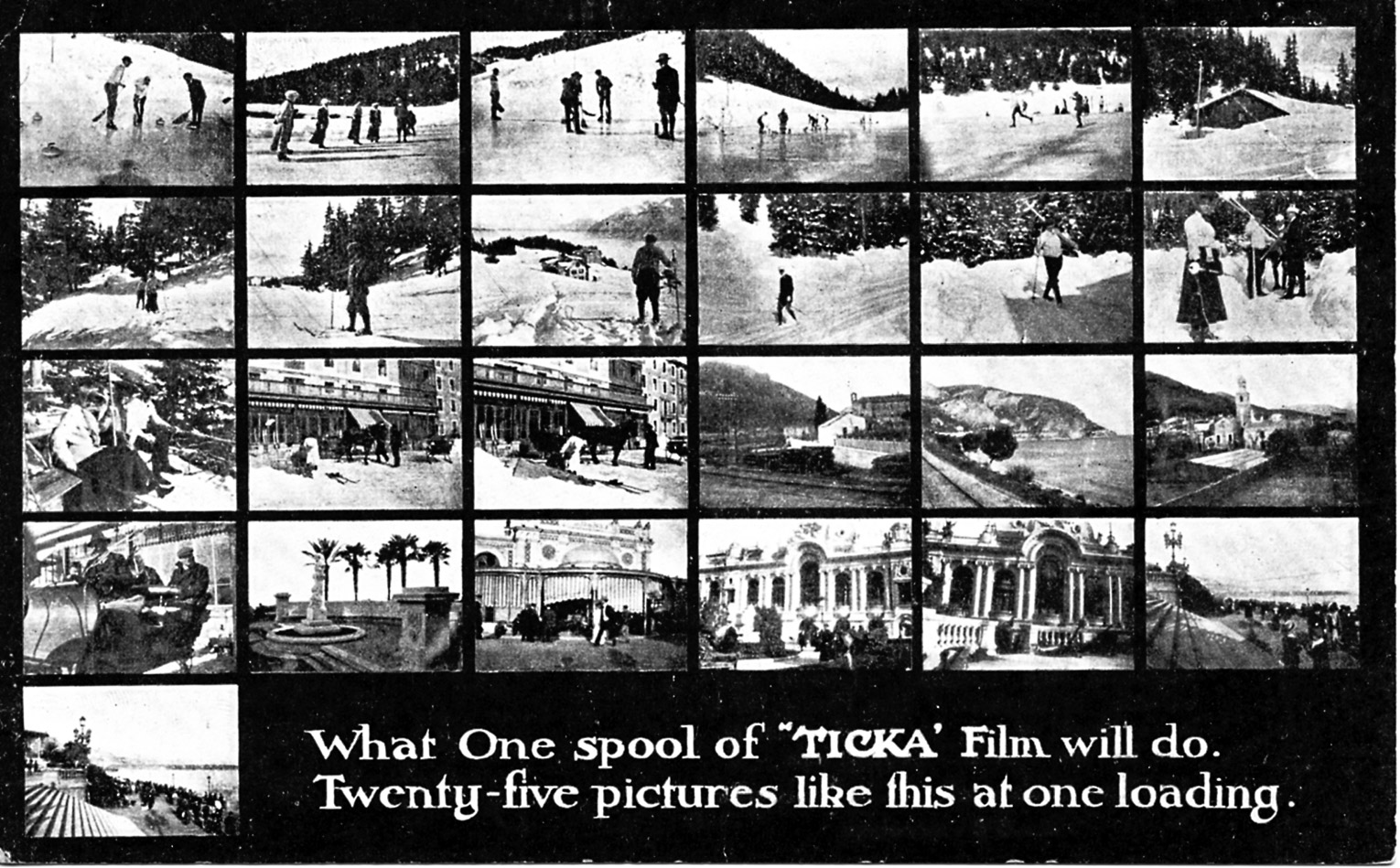
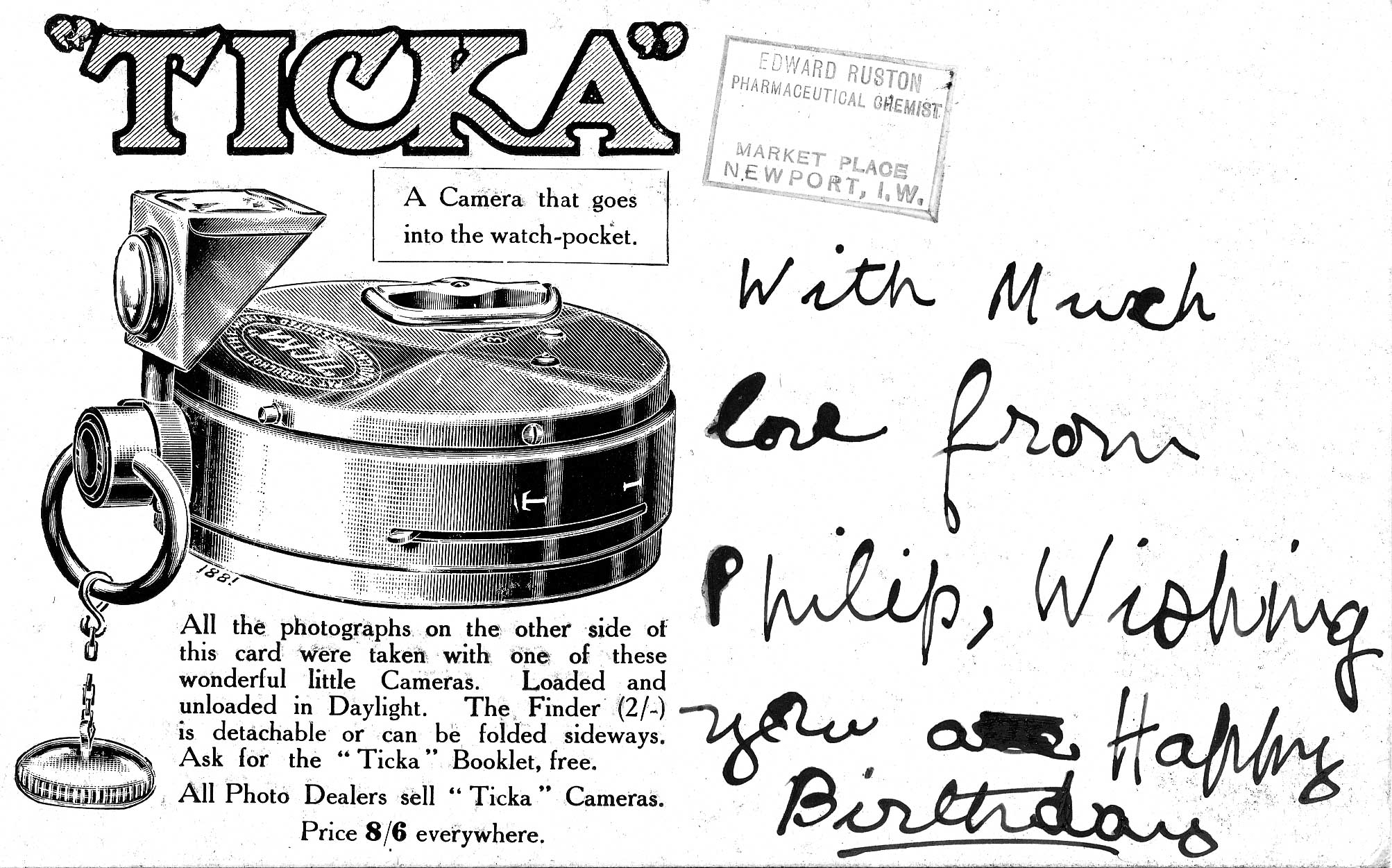
Postcard advertising the ‘Ticka” Camera
The ‘Ticka’ was an immediate success not only because it was a very good replica of a gentleman's pocket watch but also because it produced good quality photographs, no mean feat when you consider its size and the tiny negatives it produced. The camera used a daylight loading film cartridge made of cardboard. The film was just 17.5mm wide and allowed the user to take 25 pictures. The negatives according to Houghtons’ catalogue for 1914 were, ‘The size of an ordinary penny postage stamp.’ In today’s terms this is a negative of 16mm x 22mm.
Houghtons offered a complete service for developing and printing Ticka films. Developing a roll of 25 exposures cost 6d. Contact prints were 9d and a dozen enlargements of 3 ¼ x 2 ¼ cost 3 shillings.
The Camera
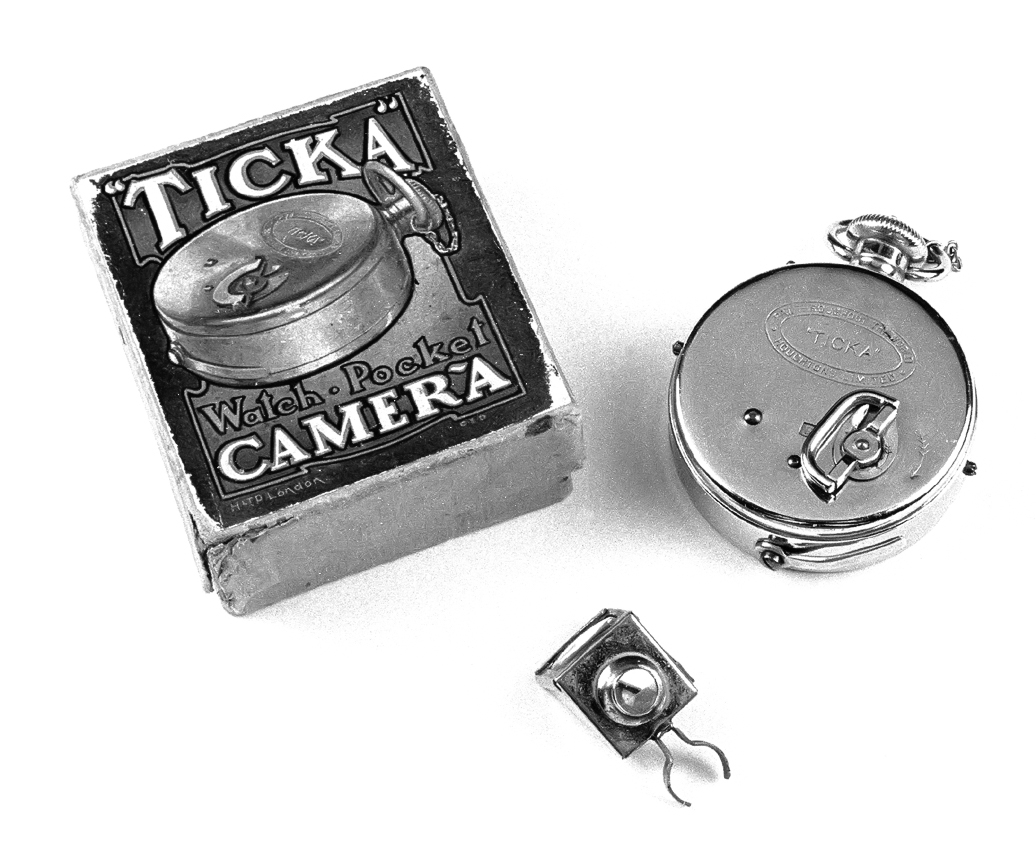
The “Ticka” was very attractively designed. One side of the camera body is engraved with the name “Ticka” in the form of a decorative monogram and was removable to allow the user access to the film chamber. However, like any tightly sealed tin, such as shoe polish, it would be very hard to open without some sort of opener. To enable the camera to be opened easily Niéll provided a lever at the bottom of the camera connected to an eccentric cam inside. When the lever was turned the cam rotated inside the casing levering up this cover allowing the user to open and either remove or load the film cartridge. This was a rather basic method of sealing a camera and although the cover is a very tight fit and the inside is painted black, some cameras have been found to suffer from light leakage.
On the reverse side of the “Ticka” was the winding knob for advancing the film and a small film counter. The film counter only indicates every second exposure so is marked 1-3-5 etc. up to 25. Turning the film advance lever, one half turn produces a click to tell you that you have advanced the film ready for the next exposure.
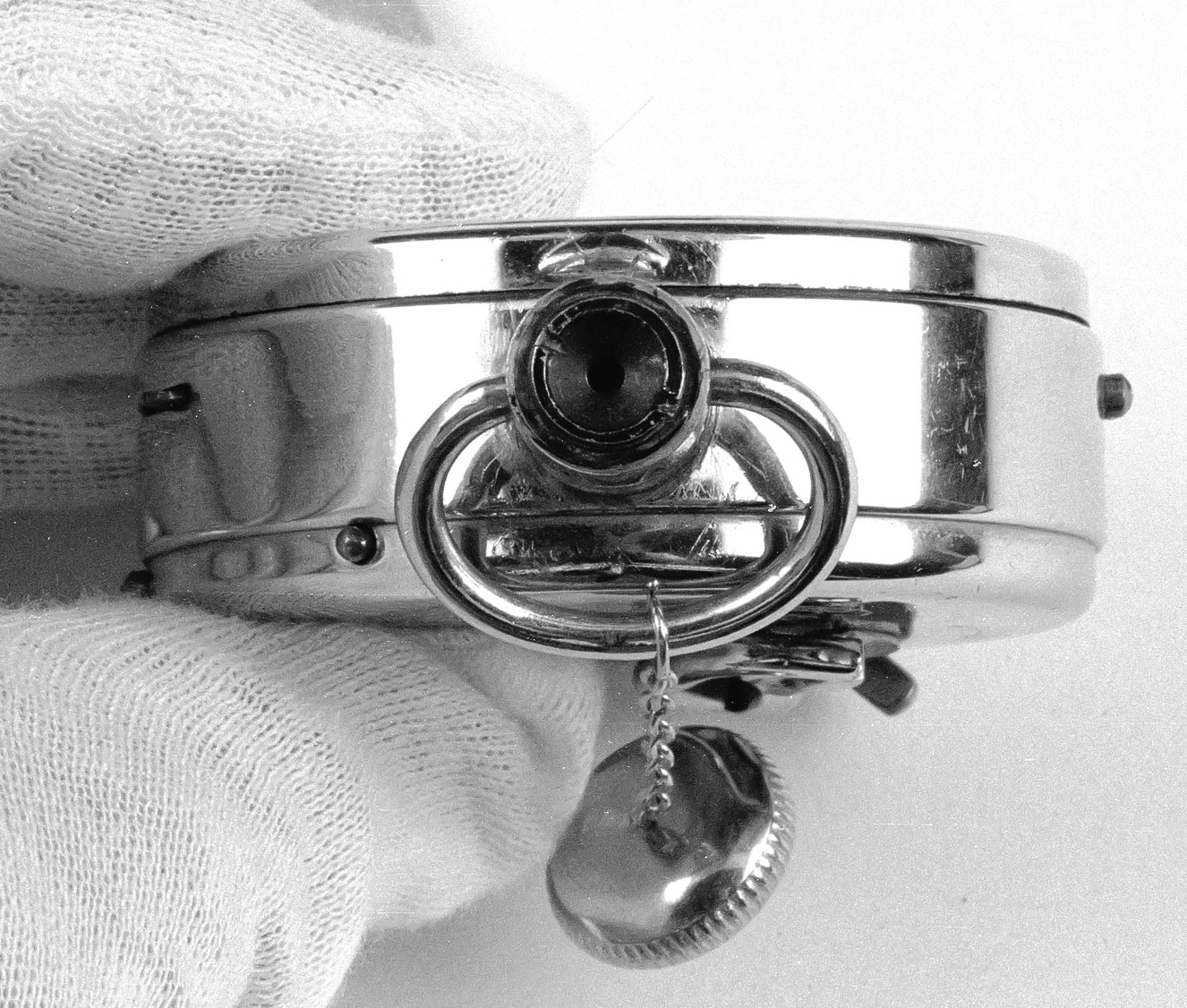
The design of the “Ticka” made it easy to use. It had a simple guillotine style shutter, which was cocked using a lever on the side of the camera. Pulling this lever halfway set the shutter for timed exposures and pulling it all the way set it for instantaneous exposures. The shutter fired by depressing a small button located next to this lever. The lens was housed in what looked like the winder stem of the pocket watch and what looked like the winding knob was in fact the lens cap, giving the camera a very realistic appearance. The cap was also a very important part of the design as the shutter was not self-capping it was necessary to cover the lens before cocking the shutter ready for the next exposure.
The sequence for taking a picture with the “Ticka” was this:
1) Open the camera by removing the cover in subdued light.
2) Set the film counter to S.
3) Load the film cartridge
4) Replace the cover ensuring a snug fit.
5) Wind the film on about 8 turns until the number 1 appears in the counter window.
6) Making sure the cap is on the lens cock the shutter by sliding the lever halfway for ‘Time’ fully for ‘Instantaneous’ exposures.
7) Remove the cap.
8) Press the shutter release making sure to hold the camera steady.
9) Finally replace the cap and repeat the process.
The entire camera was given a high-quality nickel-plating to give it the appearance of a gentleman’s pocket watch and at 8 shillings and 6 pence it was quite reasonably priced compared to its contemporaries. This combination of elegance and functionality meant it sold extremely well.
The success of the camera prompted Houghtons to add further models to the Ticka range. They soon introduced a hall marked silver plated model. Sold with a viewfinder in a Morocco leather covered case. The 1907 Houghtons Ltd. catalogue described it thus, ‘Beautifully finished and hallmarked. The Silver “Ticka” is especially suitable for presentation.’ and at 31 shillings and 6 pence this was definitely a camera for a special occasion.
Houghtons began to capitalize on the camera’s popularity and in an advert in the British Journal of Photography Almanac for 1908 they boastfully wrote, “Her Majesty the Queen uses a “Ticka” camera and has written to say she is pleased with the pictures she has taken with it.” The advert referred to Queen Alexandra.
Houghtons produced a range of accessories for the Ticka. There were 2 types of clip-on viewfinder that slid over the neck of the winder stem. A special Ticka tripod a Ticka printing box for making 3 1/4 x 2 1/4 enlargements, one for postcard enlargements and several boxed outfits.
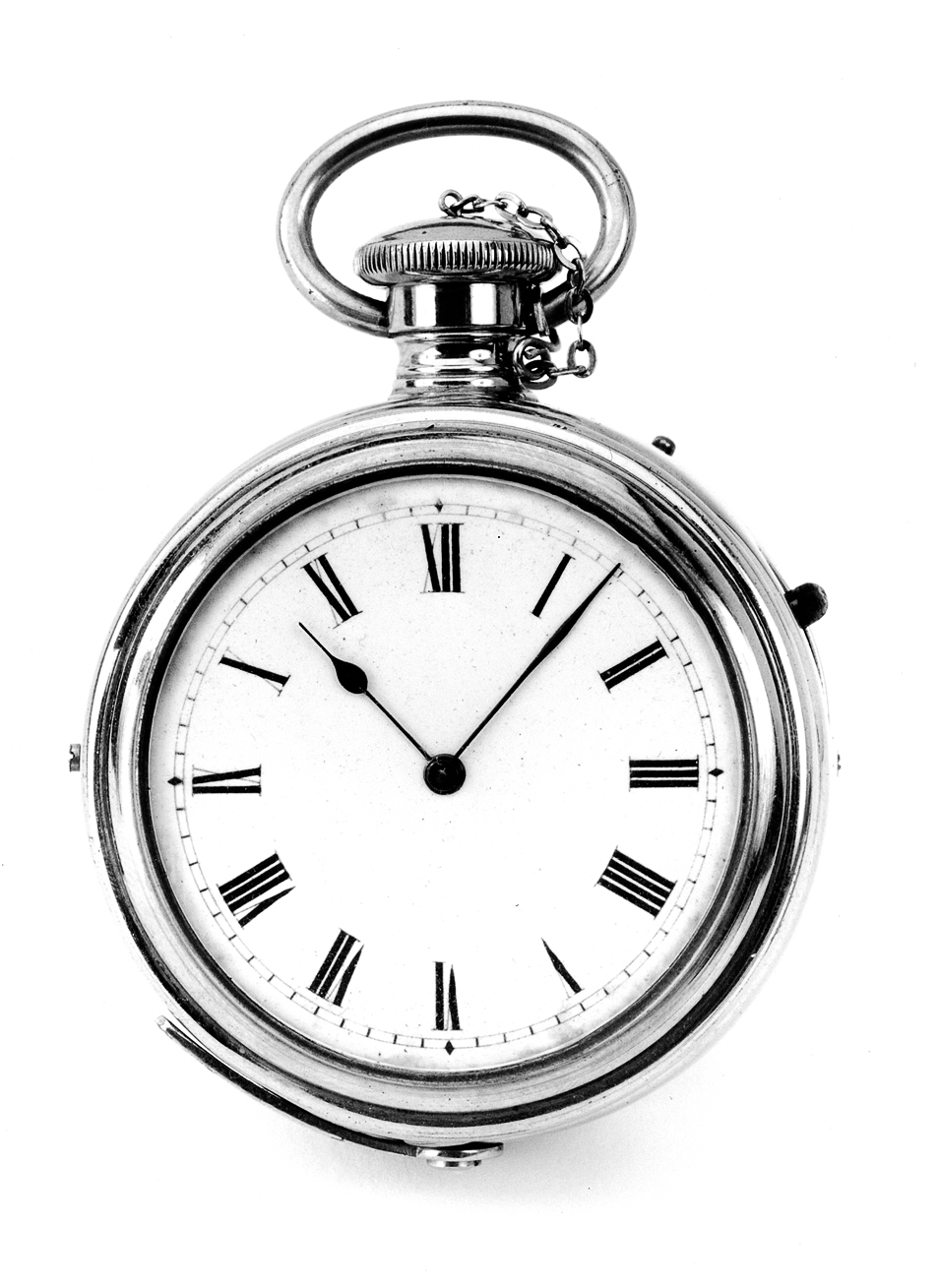
In 1908 the range was supplemented by the introduction of a very attractive model with an enamelled watch dial. Dubbed the Watch-Face ‘Ticka’, this model was only 2 shillings more expensive than the ordinary model. Selling for 10shillings and 6 pence. The hands on the dial point to approx. 7 minutes past 10 and indicate the angle of acceptance for the lens. To the passer by it would appear that the photographer was just checking the time of day, whereas he was in fact framing the next shot. Houghtons’ own advertising described it thus:
“It is an ordinary Ticka with an enamelled watch dial on the back instead of the monogram. This dial is covered with a bevel-edge watch-glass and the hands point permanently at seven minutes past ten. This is done so that a finder may be dispensed with by users of the Watch-Face “Ticka”. The two hands indicate the limits of the view included by the lens and render an ordinary finder unnecessary.”
Another introduction for 1908 was the Focal Plane “Ticka” this model is easily distinguished from other Ticka cameras because the workings of the shutter are visible on the outside of the camera. It had a focussing Cooke f/6.5 anastigmat lens, which Houghtons claimed could focus down to 1 yard. The shutter offered five speeds, 1/75, 1/100 1/150 1/200 and 1/400 of a second plus a setting for Time exposures. It cost 50 shillings making it the most expensive in the range. Perhaps because of this very few seem to have been made and the camera appears to have been dropped by Houghtons after only a short time in production. Naturally this makes it one of the rarest Ticka cameras today and highly sought after by collectors.
It is not clear if Niéll himself was involved in the development of the new types of camera but I think it probable that Houghtons’ own people came up with these later adaptations of Niéll’s original design.
Other versions of the Ticka continued in production for a few more years but the outbreak of the “Great War” in 1914 saw even these models finally disappear from the Houghtons catalogue. Due, in all probability, to the increasing pressure on British industry to concentrate on the production of items needed for the war effort. By 1915 Houghtons were having difficulty supplying photographic apparatus as the demand from various government departments increased. Recruitment for the ‘Great War’ also hampered production as it depleted staff levels.
In America the Expo Camera Company continued production of Niéll's design until the mid 1930's. Particularly interesting to collectors are the coloured versions of the Expo, which they made in Red, Blue and Black, with an unusual crackle paint finish.
What to look for when buying a Ticka
As these are pretty cameras they tend to have been looked after by their owners. A bright finish to the Nickel plating is essential for a good display model so look out for any dings or dents where the camera has been dropped and avoid badly scratched or tarnished cameras. Condition is paramount with cameras like the "Ticka", as its appeal owes much to its cosmetic appearance.
If you can find one in its original box this can add to its value. It should have the instructions, viewfinder, cap and its chamois leather pouch to be complete. Boxed sets complete with film are very desirable as they make a superb display. Although the camera was produced and sold in very large numbers, “Ticka” accessories such as the tripod are very hard to find. Finally, check that any so-called Silver models have a hallmark and the Watch Face “Ticka” should have an enamelled face with a bevelled watch glass.
The focal plane model is a real find. However more often than not these are in very poor condition and are incomplete which drops their value considerably.
If you are very lucky and find a special presentation model you can hit the jackpot. In 1991, Queen Alexandra's personally monogrammed Silver "Ticka" mentioned earlier in this article was sold at Christies of South Kensington in a special sale of 'Spy Cameras' for a hammer price of £17,500.
Company chronology covering this period
|
1904 Houghtons Ltd.
|
|
1915 British Photographic Industries set up by Houghtons and W. Butcher & Sons Ltd. with joint manufacturing. Both companies trade under their original names until 1926.
|
|
1926 Houghton-Butcher (GB) Ltd.
|
|
1930 Ensign Ltd. floated, the manufacture of cameras continued at the old H.B.M. Co. Ltd. works Walthamstow. Ensign cameras were sold from the old Houghtons premises in High Holborn, London.
|
I would like to offer my thanks to Michael Pritchard of Christies, South Kensington for his help with locating photographs of some of the rarer items illustrated in this article.
References:
· British Journal Photographic Almanac-various dates.
· Houghtons Ltd catalogues-various dates.
· Niéll’s original patent, No. 21295, 1904. British Patent Office, London.
· Focus Magazine March 1908. Industrial supplement.
Select Bibliography (A few sources of further information)
· Auer Michel, ‘The Illustrated History of the Camera’ publisher New York Graphic Society, 1975. P. 99.
· Coe Brian, ‘Cameras’ publisher Marshall Cavendish, 1978. P. 61.
· Permutt Cyril, ‘Collecting Old Cameras’ publisher Angus & Robertson, 1976. P.134-135.
· Christie's South Kensington, Catalogue of ‘Spy’ Subminiature and Detective Cameras sale, Dec. 1991. P. 42-45. (A particularly good reference for those interested in subminiature cameras)